Designing the Physical Infrastructure for Circular Economies
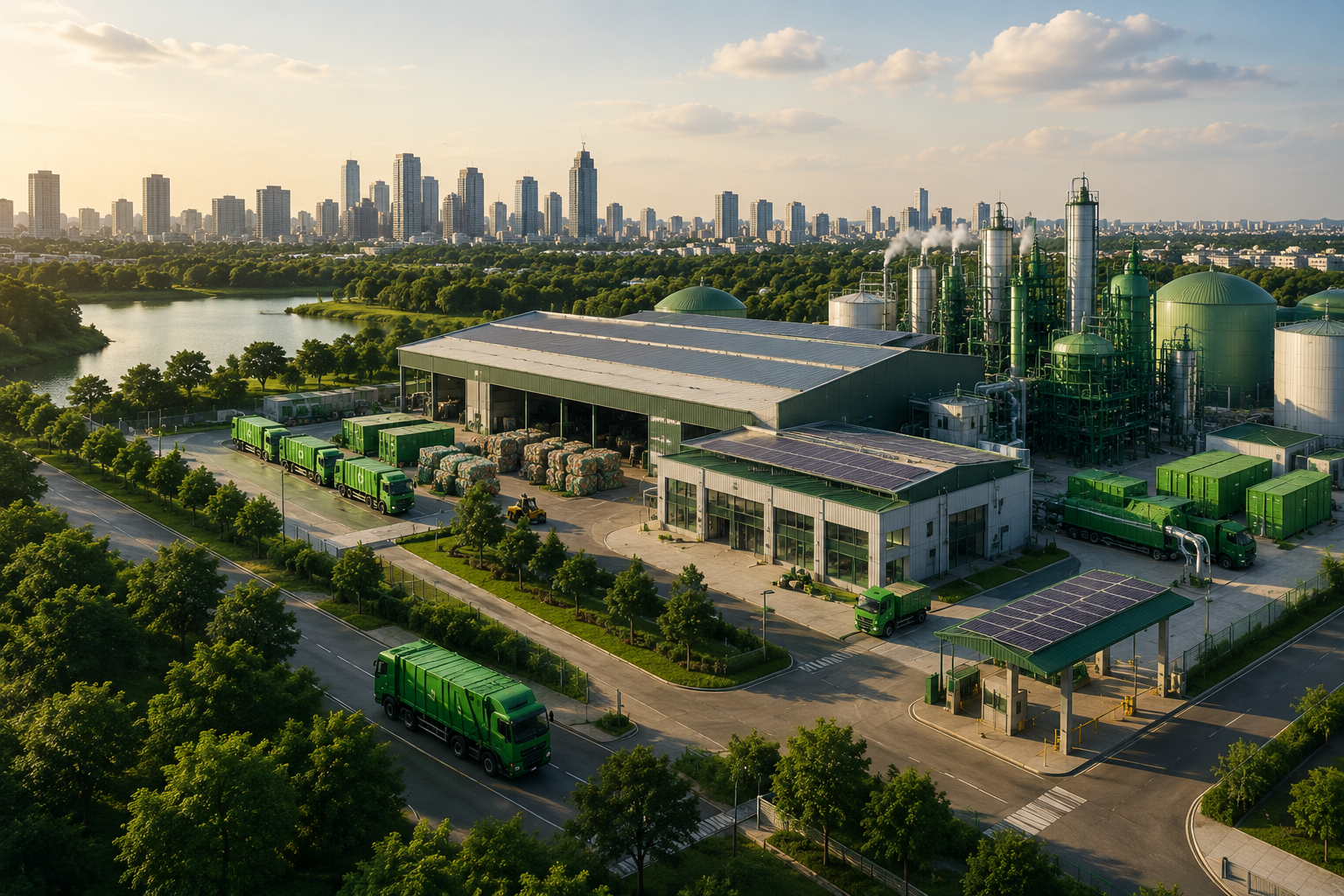
Strong circular systems begin with well-planned infrastructure. We help clients develop efficient resource recovery systems that maximize material value while reducing environmental impact.
Infrastructure Assessments
Concept & Technical Design
Implementation Roadmaps
Operational Optimization
Optimization
Investment-Ready Documentation
Featured Sectors
- Municipal Waste
- Industrial Waste
- Agriculture
- Bioenergy
- Manufacturing
- Circular Cities
Frequently Asked Questions
1. What does ASM Global's Infrastructure Advisory service cover?
We support clients across the planning, assessment, design, optimization, and development of circular economy infrastructure, including waste management, recycling, resource recovery, organics treatment, bioenergy, and circular industrial systems.
2. Can ASM Global assess existing waste management infrastructure?
Yes. We assess existing facilities, collection systems, material flows, operational performance, capacity, technology, and infrastructure gaps to identify opportunities for improvement and resource recovery.
3. What types of infrastructure projects does ASM Global work on?
Our expertise covers MRFs, recycling facilities, transfer stations, collection systems, composting and anaerobic digestion plants, waste-to-energy facilities, plastic and battery recycling, and circular industrial infrastructure.
4. How does ASM Global select the right technology for a project?
We evaluate technology options against feedstock characteristics, capacity, local conditions, technical performance, CAPEX, OPEX, resource recovery potential, environmental requirements, and long-term operational viability.
5. Does ASM Global provide engineering and technical design?
Yes. We develop concept-level and technical designs, process configurations, capacity assessments, equipment requirements, layouts, and technical specifications appropriate to the project’s stage of development.
6. Can you determine whether a proposed facility is financially viable?
Yes. Our techno-economic assessments evaluate capital investment, operating costs, revenues, resource recovery, lifecycle economics, and key risks to determine project viability and support investment decisions.
7. Does ASM Global support projects beyond the feasibility stage?
Yes. Our role can extend from initial assessment and concept development through implementation planning, procurement support, commissioning, and operational optimization, depending on the project requirements.
8. Can infrastructure projects be integrated with ASM Global's digital platforms?
Absolutely. We design digital infrastructure alongside physical infrastructure where appropriate, enabling material traceability, operational monitoring, chain-of-custody management, compliance reporting, and impact measurement.
9. Who can engage ASM Global for Infrastructure Advisory?
We work with governments, cities, development institutions, infrastructure developers, investors, corporations, utilities, and waste management and recycling companies.
10. What is the typical outcome of an Infrastructure Advisory assignment?
Depending on the scope, the engagement can result in an infrastructure assessment, technology recommendation, concept design, techno-economic assessment, implementation roadmap, or investment-ready project package.